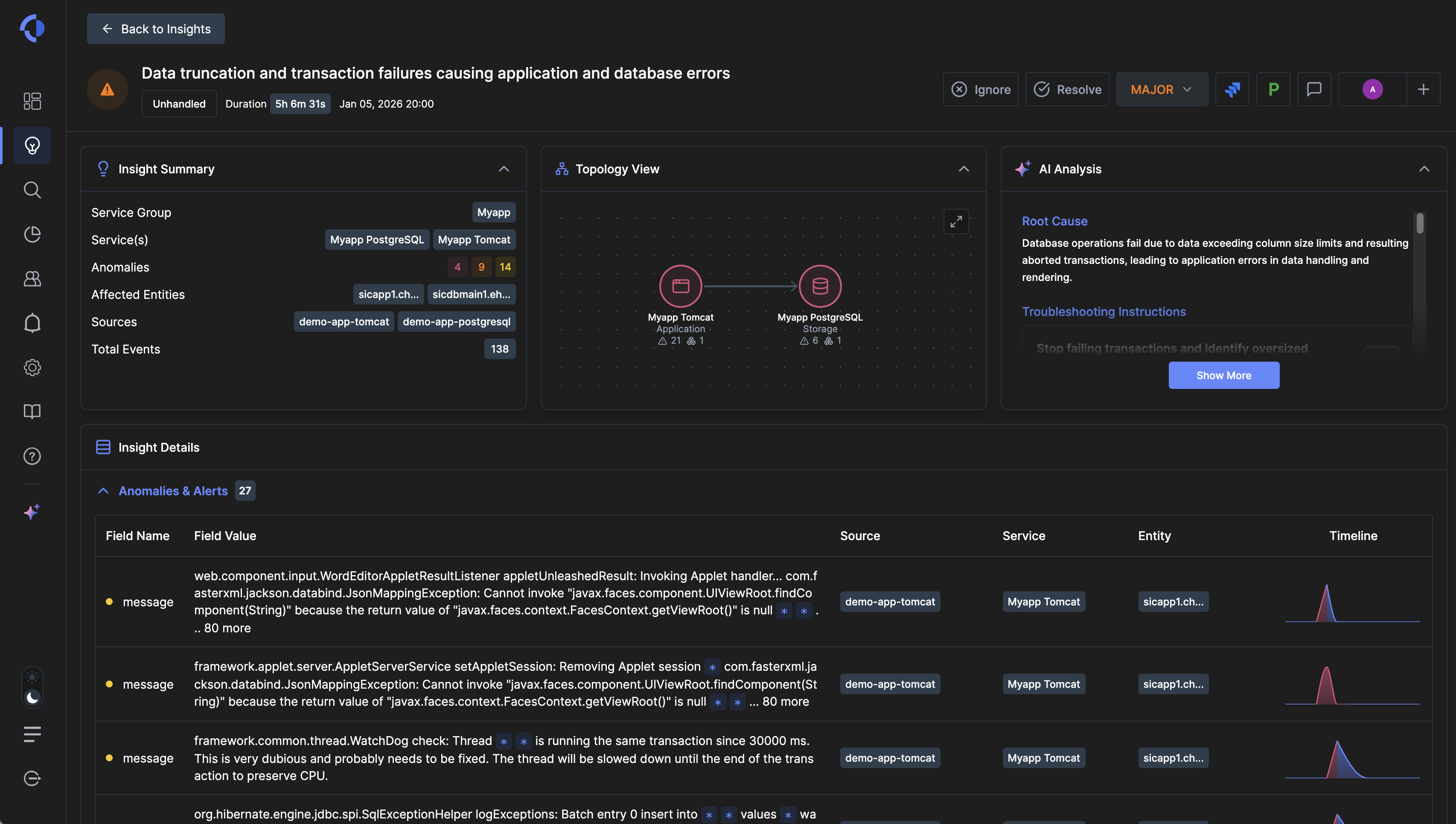
As IT environments grow in complexity, the volume of data from logs, alerts, and telemetry continues to outpace what humans can process alone. Platforms powered by machine learning (ML) have emerged to help teams stay ahead of issues: surfacing anomalies, correlating alerts, and reducing noise. Now a new class of AI systems seems to be emerging, and it is raising a critical question:
Could "agentic AI", systems that do not just learn but act, be the next evolution in AIOps?
What Machine Learning Does Well
Machine learning has long been the foundation of AIOps platforms. It identifies patterns in historical and real-time data to detect anomalies, group related alerts, and flag unusual behavior. At Logmind, ML helps IT teams sift through massive volumes of log and alert data to focus on what truly matters. It acts as a powerful filter and prioritization engine as a way to extract signal from noise.
But ML by itself does not pursue goals, explore tools, or generate new actions. It helps humans decide, but it does not act independently.
What Is Agentic AI?
Agentic AI refers to systems that operate with a sense of goal-directedness. These agents can:
- Plan and adapt their actions
- Use external tools or APIs
- Recall context and past steps
- Iterate toward solving a problem
Unlike traditional ML, agentic AI does not just recognize an issue but it reasons about it, suggests or executes actions, and adjusts based on the outcome.
Recent advancements in large language models (LLMs) have accelerated this shift. Tool-using agents that interact with documentation, scripts, or APIs are becoming more common in development and research environments. Could this same logic apply to IT operations?
Agentic AI in ITOps - Opportunity or Overreach?
Well today, Logmind enables IT teams to intuitively visualize what is happening across their systems in real time through a dynamic topology view. For instance, an event such as a memory issue on a VMware host can be quickly traced to its downstream impact that is affecting database performance and eventually slowing down the web servers of a critical online store application. This visual clarity enables faster root cause identification and more informed decision-making.
Now imagine extending this with agentic AI. In such a scenario, an agent could not only detect the memory issue but begin tracing its potential root causes by reviewing logs, comparing similar past incidents, and evaluating system dependencies. It might then generate a proposed action plan - such as reallocating memory resources, restarting specific services, or escalating with contextual evidence - all while ensuring compliance checks are met and proposing actions for team review.
To begin, such capabilities could be piloted with lower-risk workflows, like automating ticket creation or drafting remediation suggestions - helping build confidence before deeper automation is explored.
These examples highlight the potential of agentic AI. But whether they are practical or safe for critical infrastructure remains an open question.
Challenges to Consider
While exciting, the application of agentic AI to AIOps raises several concerns:
- Trust and explainability: Can teams rely on decisions made by autonomous agents?
- Security: What are the risks of agents executing actions in live environments?
- Complexity: Are we adding another layer that itself needs oversight?
There is a fine line between helpful automation and unpredictable behavior. In IT operations, stability and accountability are paramount.
What This Means for Logmind
Today, Logmind focuses on delivering clarity - helping teams proactively detect and resolve issues with smart ML, log/alert correlation, and real-time topology mapping. But as the landscape continues to evolve, a key question emerges:
How far should automation go?
Will decision-support layers remain advisory, or begin to act? Could agentic principles help reduce response times or introduce new risks?
We believe it is the right time to explore these questions. And we would be curious to hear how other teams are thinking about them.
How is your team thinking about agentic AI in IT operations?
Is agentic AI on your radar, or do you see other priorities taking precedence?
We would love to hear your perspective.